The Human Factor: Why Ergonomics Drive Wire Termination Quality
Physical fatigue directly degrades crimp tensile strength and seal integrity on MIL-DTL-38999 harnesses. When your operators stretch beyond the 450mm primary reach zone to grab pneumatic crimp tools or tooling dies, postural compensation sets in. Muscle strain in the forearm and wrist alters hand-tool alignment, introducing micro-angular misalignments during the crimp cycle.
Poor wire harness workstation ergonomics forces operators to apply off-axis force, preventing ratcheting hand tools from completing their full cycle and violating SAE AS81969 tooling standards. Optimizing workbench geometry eliminates this variance, protecting your quality metrics from operator exhaustion.
Anatomy of a High-Risk Workstation: Common Ergonomic Failure Points
Physical fatigue directly degrades crimp tensile strength and seal integrity on MIL-DTL-38999 harnesses. When your operators stretch beyond a 450mm primary reach zone to grab pneumatic crimpers or tooling die sets, micro-traumas accumulate in the rotator cuff. Fixed-height benches force operators over 1.8 meters to hunch, misaligning their line of sight with barrel-to-conductor inspection scopes. This postural strain causes operator eye fatigue, leading directly to missed birdcaging or unseated contact insulation grips during final quality checks. Poorly positioned pneumatic tool hangers create counter-torque, requiring excessive wrist extension during repetitive termination cycles.
Key Ergonomic Parameters for Aerospace Wire Termination Stations
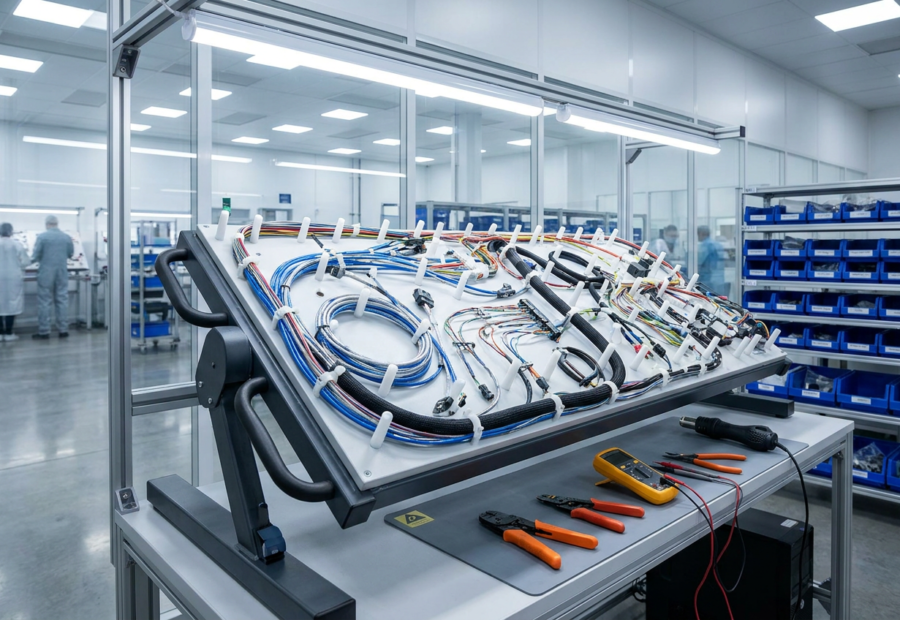
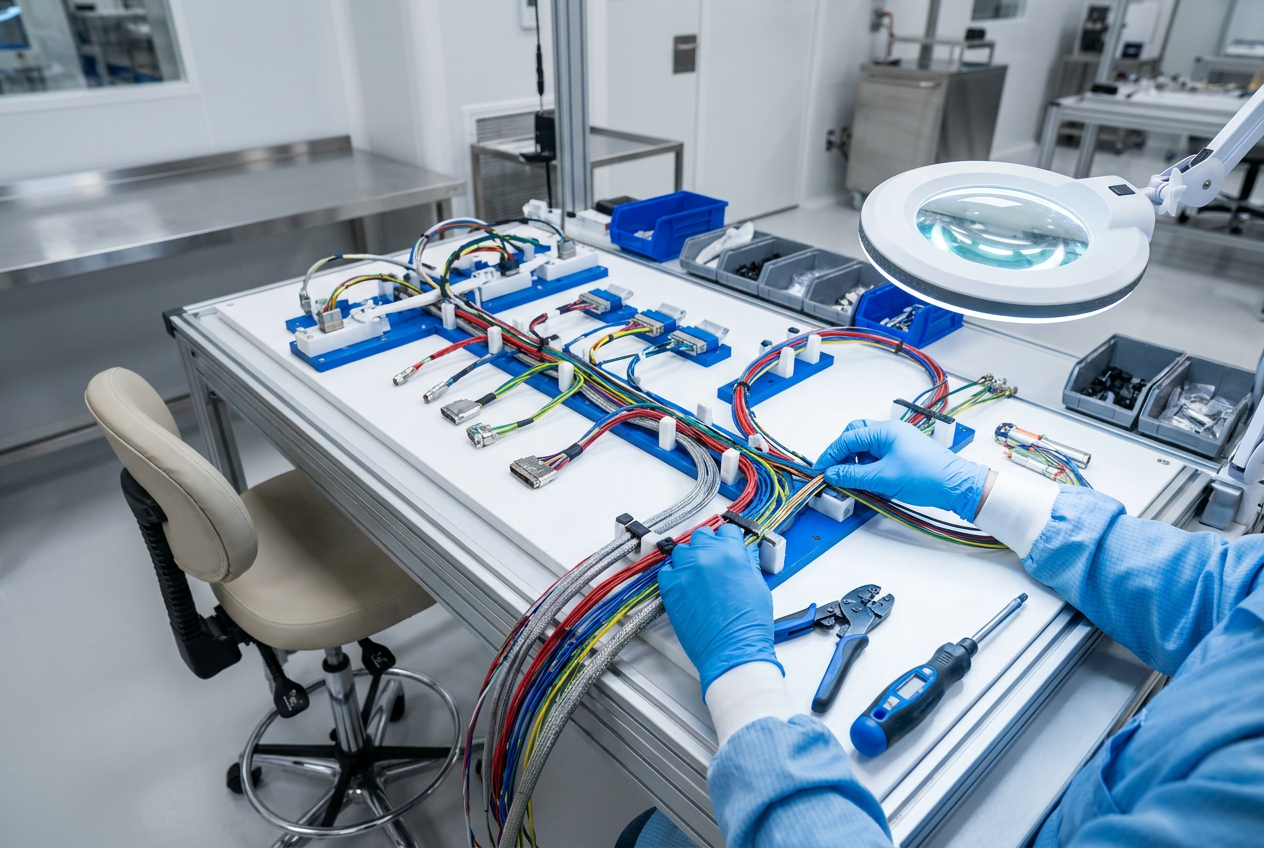
Set your workbench surfaces between 700mm and 1100mm using electric height-adjustable frames to accommodate both seated and standing tasks during MIL-SPEC harness assembly. Limit primary hand reaches to 350mm to prevent shoulder strain when handling heavy pneumatic crimp tools. Position calibrated hand crimp tools and positioners on spring-loaded balancers within a 45-degree arc directly in front of the operator. Ensure local task lighting delivers at least 1,500 lux at the termination point to eliminate visual parallax errors during barrel inspection. Comply with ISO 6385 workstation design principles to isolate high-frequency vibration from bench-mounted tooling and reduce operator fatigue.
Low-Cost Redesigns: Height, Reach, and Lighting Corrections
You can eliminate frequent operator fatigue without buying new benches. Start by mounting your pneumatic crimp presses on sliding rail plates. This adjustment brings the tool drop point within the primary 300mm reach zone, stopping wrist torque during repetitive MIL-DTL-38999 contact insertions.
Next, swap out generic overhead fixtures for articulated LED task lighting delivering 1,000 lux directly to the barrel inspection zone. Position the lamps at a 45-degree angle to eliminate glare off tin-plated copper strands. Finally, install gravity-feed terminal caddies angled at 30 degrees, placing loose-piece contacts right at the fingertips to slash cycle times and awkward shoulder reaches.
Integrating Ergonomics with Crimping Tool Compliance and QA
Physical alignment directly affects AS9100 quality control. If workstation reach forces an operator to twist while cycling a pneumatic crimp tool, barrel alignment suffers, leading to micro-cracks in nickel-plated copper strands. Tie your ergonomic audits directly to your quality assurance metrics. Require QA inspectors to verify that tool selector settings fall within primary reach zones—between 200mm and 400mm from the edge of the board. When calibration logs show recurring off-center indentations on M22520 frame-type crimpers, inspect the bench height and anti-fatigue mat placement before blaming operator technique. Aligning your ergonomic parameters with ISO 9001 compliance documentation ensures repeatable, defect-free harness assembly.
Implementing a Workstation Audit: A Step-by-Step Approach
Execute a three-phase audit to isolate ergonomic defects on your assembly floor. First, map operator reach zones during MIL-DTL-22520 hand tool cycles; ensure primary ratchets sit within a 350mm secondary envelope. Second, record cycle times and postural deviations over a four-hour shift to catch micro-fatigue. Third, correlate audit findings directly against your AS9100 scrap logs. If operators report wrist strain at Station 4, cross-reference that station’s reject rate for misaligned pin insertions. Pinpoint physical stressors before they compromise harness reliability.
Measuring the Impact: Quality Metrics and Defect Reduction
Track first-pass yield (FPY) alongside operator cycle times to quantify workstation improvements. When you eliminate awkward reaches during MIL-DTL-22520 tool actuation, scrap rates for stranded conductor damage typically drop within thirty days. Monitor your crimp pull-tester logs for shifts in tensile variance. Reduced wrist strain directly correlates with tighter Cpk control on miniature contacts. Pair these electrical and mechanical metrics with a monthly musculoskeletal incident log. If your operators report zero shoulder fatigue while building complex multi-branch harnesses, your dimensional layout and tool mounting heights are dialed in for repeatable aerospace compliance.
FAQ: Ergonomics and Wire Termination Workstations
Do you need to upgrade to electric height-adjustable frames for AS9100 compliance? ISO standards do not mandate motorized benches, but they do require you to eliminate repetitive strain variables that cause micro-defects in high-reliability wire harnesses.
How often should you audit workstation layouts? Run a baseline reach and lighting check every six months, or immediately following any spike in pull-test failures on MIL-DTL-38999 assemblies.
What is the best lighting level for precision crimp inspection? Target a minimum of 1,000 lux at the tool interface to prevent visual fatigue and catch strand damage before final insulation support crimping.
Frequently Asked Questions
Are motorized workbench frames strictly mandatory for aerospace compliance?
Regulatory frameworks do not explicitly mandate electric frames, but they require facilities to mitigate physical strain variables that compromise high-reliability assembly standards. Adjustable heights ultimately help operators maintain the stable posture needed for flawless harness fabrication.
How do improper bench heights impact MIL-SPEC wire harness quality?
Incorrect surface elevations force technicians into unnatural working postures, accelerating fatigue in the upper extremities. This physical degradation directly translates to inconsistent crimp tensile strength and compromised environmental seal integrity.
What is the ideal distance for positioning frequently used crimp tools?
High-frequency tooling should sit within a strict 300mm to 350mm boundary from the operator’s seated or standing position. Keeping pneumatic presses and manual ratchets inside this perimeter prevents harmful torso twisting and repetitive shoulder strain.
Can low-budget facilities improve workstation ergonomics without buying new furniture?
Existing infrastructure can be significantly optimized by mounting heavy crimp presses on sliding rail plates rather than purchasing entirely new benches. This simple modification brings critical drop points closer to the technician, instantly reducing wrist extension injuries.
How does operator posture influence AS9100 quality control metrics?
Awkward physical alignment introduces instability during tool cycling, which frequently causes barrel misalignment and microscopic fractures in copper strands. Correcting workstation geometry immediately stabilizes assembly consistency and elevates first-pass yields.